
Posts Tagged ‘life coach’
Steps On How To Gain Personal Power
Who doesn’t want to be in control? We spend a tremendous amount of effort and energy in controlling our lives and our environment, only to be “surprised” when our efforts fail. Even though we convince ourselves that we are in control of our life and environment, the reality is that we aren’t in control of either.
Much of our stress and anxiety is caused by our failure at controlling life. So, finding where we do have control in life reduces our stress and anxiety. We do have control over our thoughts, feelings, and beliefs about ourselves and the world around us. How I think and feel about myself influences my view, or perception, of the world.
Learning to gain personal power starts with an understanding of power. According to the Merriam-Webster dictionary, power is defined as “the ability to act or produce an effect”. In other words, our power is in our action. Power is not an outside force acting upon us, power comes from within. If we want to have personal power, we need to believe in our ability to control our thoughts and feelings, then to take action.
Many of the clients who come to me for life coaching are not only seeking inner peace, but also personal power. We spend much of our sessions talking about empowerment. Empowerment is about self-sufficiency, the ability to act on our own. We have the power to take action for our good and the good of others, therefore, we are empowered through our actions. Empowerment challenges our assumptions about the way things are and how they can be. We can change the status quo.
Challenging our assumptions about our situation allows us the freedom make changes. The purpose of personal power, as I see it, is in taking the actions necessary to make changes in our life. When something negative happens to us, dwelling on the negative only serves to make us feel stuck and a victim. The reality is that we may not be able to change what happens to us, but we do have the power to change how we feel about the situation. Therefore we have the power to take action in coping with the situation.
How do we gain personal power? Take these steps:
- Spend at least 10-20 minutes daily in quiet (or at least with minimal distractions) so as to gain insight about yourself. We need to learn about our thoughts, feelings, and desires without judging them. Simply spend the time to get to know yourself.
- Practice daily changing those thoughts which lead you away from your happiness. Recognize how the changing of your thoughts change your emotions and your behaviors. Use the experience to believe in your power and ability to control your thoughts and emotions.
- When adversity happens, and you find yourself stressing over the situation, make two lists; one list for those things in the situation you have control over, and another list for those things in the situation you have no control over. Focus your actions and energy on changing those things you have control over, ignoring the other list. Ignoring what we can’t change and taking action where we can is empowering. Don’t focus on changing the situation, keep your focus on changing your thoughts and actions.
- Repeat steps 1 – 4.
A key to gaining personal power is in believing that we can’t change the situation, but we can always change our outlook, or our thoughts, on the situation. Trying to control what we cannot control causes anxiety as we don’t have the power to control what is outside of ourselves. Keeping perspective on how I feel and what I can do on the inside makes all of the difference. Keeping our perspective on what we can change and control empowers us to take action, therefore lessening anxiety as we experience the change.
Understanding the power we have within, and taking the actions needed to make changes in life, allows us to overcome the obstacles we face. When life’s obstacles happen we will no longer fear them for we believe in the power that we have to make changes within us which will change our perspective on self and the world around us. We have not only gained personal power, but as a result, we are now empowered to face ourselves and the world.
{loadmodule mod_custom,continue the conversation here or on social media}
Life Coaching – Why Do I Need It?
Do you find yourself feeling anxious or stressed? Maybe life isn’t the way you expected and you aren’t sure how best to cope. Do you find yourself needing goals and a path toward the future? I know I have answered yes to these questions at different times in my life. Who hasn’t? These are typical life issues many of us struggle with daily.
Through my own life experiences I have found that there is always hope, and always an answer to our worries and concerns. The answers may not be what we want to hear, or we may not know how to find them, but they do exist. In our struggle with life issues we tend to either keep them to ourselves for fear of embarrassment or ridicule; or we turn to trusted friends who most likely also struggle with similar life issues. Few of us turn to professional help. Why?
Until recently, the only professional help available to us was to see a mental health counselor. There is nothing at all wrong with this option! But, the prospect of seeing a counselor can be intimidating, expensive, and mis-understood. Unfortunately,, mental health continues to be stigmatized. I wish it weren’t the case, but those who suffer from mental illness are viewed “differently” from those suffering from a medical condition (I hope that changes soon). What are we to do when we are in need of guidance but don’t see any options or hope?
There is an option other than seeing a mental health counselor; visit a life coach. Life coaching is a practice that involves guiding people to identify and realize their goals, dreams, and aspirations while breaking through the barriers. By becoming self-aware we are free to develop our talents and potential. Not everyone who is struggling in life suffers from a mental illness. A life coach is someone who guides you through life’s struggle. Unlike a counselor, a life coach doesn’t diagnose an illness. A life coach is active in the sessions and can even follow up with you through text, quick calls or emails.
As a counselor myself, I am in no way disparaging the counseling profession, rather, I am offering an alternative. Many of my clients see me for life coaching rather than counseling because of the stigma of mental illness, or they don’t believe they have a mental illness. Many of us who struggle with life’s difficulties don’t rise to the level of a mental health diagnosis and illness. For example, if I cut myself while chopping food for dinner, I will place a bandage over the cut until it heals. But, if the cut is deep and the bandage is not helping, I will go the hospital or a doctor. In this analogy, the bandage is the life coach, while the hospital is the mental health counselor. If I feel sad over a recent loss and not sure how to cope, I would call a life coach. If I feel sad but can’t get out of bed or go to work, and the sadness has lingered for months, I would call a mental health counselor.
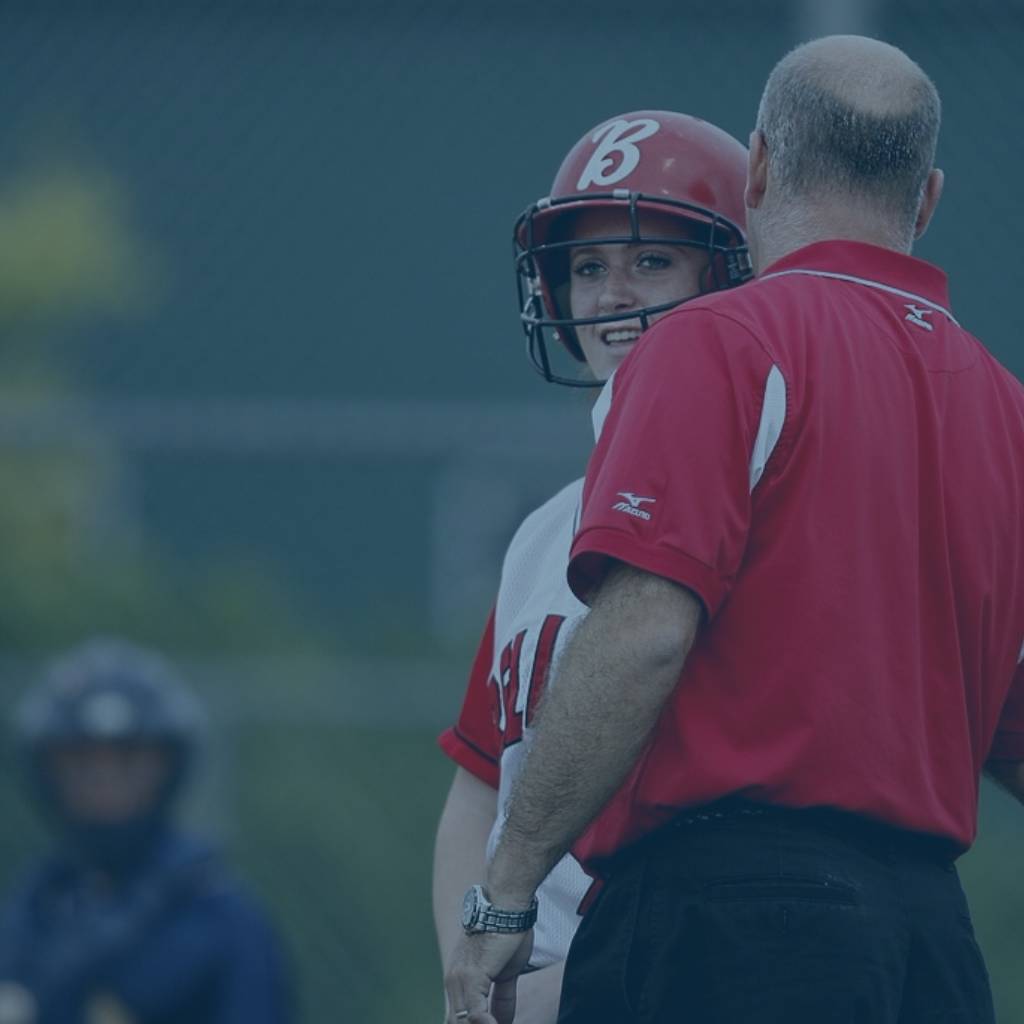
Life coaching is a process which guides us to formulate goals, cope with life’s stressors, and teach us the skills needed to live a healthy life. Life coaching is not that different from the role of a sports coach. The sports coach’s role is to make me better at what I already do. They teach me techniques I may not be aware of, and encourage and push me in ways I myself couldn’t. In the end, the sports coach makes me better at what I already knew how to do. The same holds true for life coaching. The life coach guides us to be better at what we already know how to do, namely, to live my life. Those areas of life which may need improvement are improved, and those areas of life which need encouragement we are encouraged to perform better.
Athletes at all levels of play use a sport coach for guidance. No matter how long a player has been playing their sport, regardless of their ability and fame, they still listen to the guidance of a coach. There is no shame in seeking out a life coach no matter your age or previous ability to cope with life. Living in the present moment, if you need guidance, seek a life coach.
When life knocks us down or confuses us, there is no reason to struggle alone. Seek out a life coach who will guide you, provide encouragement and hope, giving you the tools needed to live the best life possible.
If you’re ready to explore life coaching, I would be honored to help. You can read more about my practice or call me directly at 301-850-2177.
{loadmodule mod_custom,continue the conversation here or on social media}
How I Became Self-confident And Happy

The other day I was asked “Have you always been this self-confident? Do you ever doubt yourself?” I was somewhat taken aback by these questions as I don’t typically think of myself as confident. My current life activities consists of family, life coaching, counseling, writing, teaching at a university and college, hosting a podcast, giving lectures, and speaking at conferences. I keep myself active, but I enjoy all that I do. Is my enjoyment the self-confidence people see in me?
Self-confidence is defined as a feeling of trust in one’s abilities and talents, yet this definition presupposes that I have an awareness of my abilities and talents. I feel this is the reason why many people lack self-confidence; they don’t recognize their own abilities and therefore wrongly assume that they are unable, or incapable, of performing a task. Actually, I just described myself.
While growing up I was extremely shy and unaware if my abilities and talents. This lack of self-awareness, coupled with my avoidance of others, reinforced in me a belief that I wasn’t capable of much in the way of outward achievement. As a child, and even through my early adulthood, I enjoyed the solitary pursuits of reading, studying and writing. Sure, I had friends with whom I enjoyed doing things, but my friends were few and not among what was known as the ”in crowd”. For me and my insecurities and shyness, they were “safe”.
A lack of self-confidence is typically coupled with a person’s self-esteem, or sense of self-worth. In my experience, though, that assumption wasn’t true. Although I lacked insight into my gifts and talents, I did feel positive about myself. I enjoyed my hobbies and the people I chose to be close to; life was good. My sense of self-worth was high, while at the same time my self-confidence was low.
How can this be? In my early life it meant that I did well in school, but if I were given a task of importance to complete, or asked to give a speech, my mind would immediately jump to the thought “Me?! I don’t have the skill to do this? There have to be people better at this than me!” At the time I failed to realize that I was asked because someone else saw the talent and ability in me. I failed to take into account the perspective of the asker because I failed to recognize my own giftedness. If I couldn’t see it in myself, I was never going to accept that someone else saw what I myself could not.
So, what changed in me, given my history of lack of self-confidence and shyness, that now I am able to speak to large crowds, teach university classes, and train groups of peers? There’s no one event or “aha moment” which made all the difference. For me, it was a progressive shift, through meditation, where I became more self-aware of my giftedness as well as my weaknesses. It is in accepting both aspects of myself that I feel have been the most transformative.
Here are some reflections I have learned in my adult years which have impacted my ability to be self-confident:
- I’m not responsible for other’s happiness. I am responsible for my feelings and my actions toward others. This helps my self-confidence in that I don’t seek nor need the approval of others to know that I am good at what I do. The constructive opinions of family and close friends I respect, but needing to be liked by everyone is no longer a goal of mine.
- Not knowing is ok. Early in my career I stifled myself in that I felt that if I didn’t know everything there was to know in my field, than I was a fraud. I now recognize how wrong I was, but it was in me eventually realizing that even the “experts” in my field didn’t know everything for me to gain confidence in my own knowledge and experience of my field. What I don’t know, I will learn from others and so continue to grow.
- I became empowered in my self-confidence every time I stepped out of my comfort zone only to realize that I did well. The more times I gave something a try and ended with positive results, the more I became confident in my abilities. Yes, those times when it didn’t go well seemed to set me back more than the positive times moved me forward; but regardless, I kept on keeping on. I’m not perfect when it comes to public speaking or teaching, etc, but I do my best, and more times than not there is positive feedback from the audience. Had I not moved out of my comfort zone, my self-confidence would still be quite low.
- As I mentioned above, self-confidence is not to be equated with always being right or knowing everything. Self-confidence grows from an understanding of who you are, the positives and negatives. We all have growth opportunities, so don’t let the fact that you are not “perfect” stop you from feeling self-confident. Feel self-confident knowing that you are both talented and flawed; perfect in some aspects yet need to grow in others.
- Take time for yourself. Self-care is vitally important to physical and mental health. Spending time nurturing yourself and meditating provides you the opportunity to know yourself better. In this self-knowledge you will find your confidence and your growth opportunities. Work on both!
In my continuing journey of self-confidence, I realize that I don’t need to be perfect in all knowledge or skill, but I do need to be self-reflective with a willingness to grow. Take the time to learn about yourself, then step out of your comfort zone and give it try! If it works well, wonderful, do it again! If it doesn’t work well, wonderful, learn from it then do it again!
{loadmodule mod_custom,continue the conversation here or on social media}
Love As A Passion To Be Pursued

Today, as we celebrate Valentine’s Day, our thoughts and feelings turn to love and to those whom we love. But do we really understand what that simple, yet powerful word, LOVE, means?
Personally, this is a tough word for me to reflect on since my natural inclination is toward the intellectual pursuits rather than understanding my emotions. Yes, as a counselor I deal with the emotions of my clients, but note what I wrote: “my” emotions. I have no issue in helping others to come to an understanding of their own emotions and how they affect their lives. But my emotions, well, that’s a whole different story.
So, what is love? This is what the Christian bible states about love:
1If I speak with the tongues of men and of angels, but do not have love, I have become a noisy gong or a clanging cymbal. 2If I have the gift of prophecy, and know all mysteries and all knowledge; and if I have all faith, so as to remove mountains, but do not have love, I am nothing. 3And if I give all my possessions to feed the poor, and if I surrender my body to be burned, but do not have love, it profits me nothing.4Love is patient, love is kind and is not jealous; love does not brag and is not arrogant, 5does not act unbecomingly; it does not seek its own, is not provoked, does not take into account a wrong suffered, 6does not rejoice in unrighteousness, but rejoices with the truth;7bears all things, believes all things, hopes all things, endures all things.8Love never fails; but if there are gifts of prophecy, they will be done away; if there are tongues, they will cease; if there is knowledge, it will be done away.9For we know in part and we prophesy in part; 10but when the perfect comes, the partial will be done away. 11When I was a child, I used to speak like a child, think like a child, reason like a child; when I became a man, I did away with childish things. 12For now we see in a mirror dimly, but then face to face; now I know in part, but then I will know fully just as I also have been fully known. 13But now faith, hope, love, abide these three; but the greatest of these is love.
Angry At The World? Use That Anger For Good

Maybe it’s just me, but it appears that anger is the main emotion of our time. Yes, there is kindness, and I do meet people who are not angry; yet, of the people I meet, more display anger than who display kindness. I don’t think my experience is abnormal.
In a study conducted a year ago, researchers Okuda, et al. discovered that 7.8% of the Americans they surveyed, 34,000 adults over the age of 18, found an overall prevalence of inappropriate, intense, or poorly controlled anger. That percentage may not seem high, but round out the numbers, and for every 34,000 adult Americans, 3,000 of them exhibit poorly controlled anger. (“Prevalence and correlates of anger in the community: results from a national survey.“ April 2015)
Why is there so much anger? We see it in the streets, in demonstrations, on social media, etc. I have my theories, but the focus of this article is not on the why, or the origin, of the anger. Rather, I write this article on anger from the perspective of mindfulness. In mindfulness we are urged to remain in the moment, non judgmentally. Following that suggestion, I don’t necessarily need to understand why someone is angry. What would be helpful, assuming the anger is taking a person away from their peace, is to guide that person to shift their perspective and so take an action in the hopes of returning that person to sense of peace.
As a counselor and practitioner of mindfulness, I don’t perceive the feeling of anger as either positive or negative. The feeling is the feeling; what I do with the feeling is what is either positive or negative. So, anger in and of itself is not the issue. My perception and actions based on the anger is the issue. Therefore, that many people these days seem to be angry is not what bothers me. What many of them are or are not doing is the issue.
Anger, as an emotion, has it’s place. Anger has been used successfully as a means of defense against danger, both physical and emotional. Anger, felt when we perceive a threat, produces in us an increase of the chemical adrenaline. This chemical prepares the body for a physical fight, and for later coping with the emotions of the event.
In today’s society, whenever we feel that our ideas, beliefs, or opinions are attacked, our basic instinct kicks in resulting in an anger response. Anger is undoubtedly the most judgmental of our emotions. It’s also the most moralistic, self-righteous, and repudiating. Most of us will defend, sometimes to the death, what we believe. Attacking a person’s beliefs or opinions is akin to an attack of the person themself. Why? Because we are the thinker of our thoughts! In essence, if you attack my thoughts, you attack what I created, and in so doing you attack the creator, me.
Anger is probably the only emotion which we consciously cling to. Think about the last time you felt happiest. How long did that feeling, in it’s intensity, last? And when the feeling drifted away, many of us say “I wish it lasted longer.” Yet, when it comes to anger, when was the last time that feeling simply drifted away? For many of us, we hold onto it, ruminating over and over the offense which was done. Logically, between the emotions of happiness and anger, which would you choose to stick around? I would choose happiness, but as I write this I’m not angry. If I were, odds are I’d be choosing anger.
Why do we hold on to anger? Let’s examine what the emotion of anger does for us:
- It provides us with a feeling of power.
- It enables us to believe that we are in control of the situation.
- It confirms for us that we are right and correct in our stance.
Examining this list, why wouldn’t I want to hold onto anger? Actually, there is a number one reason why we can’t bear to let go of our anger. If I give up feeling angry then I allow myself to feel less powerful, less in control, and I may discover that I’m not completely correct in my thoughts or beliefs. If I am willing to give over power and control to re-examine my thoughts, I have just opened myself up to self-examination!
Self-examination is one of the goals of meditation, and a means of growth. But self-examination can be scary as we uncover aspects about us that we may not wish to open, or aspects that even we don’t like. As we hold onto our anger we don’t allow for this self-examination. In many cases, that which angers us in others is exactly what we are covering up in ourselves!
As I see it, there is what I call a “healthy anger” as opposed to an “unhealthy anger”. Healthy anger is feeling angry by choice (I grant that all emotions ultimately are chosen, as I often mention. For the sake of this analogy I am taking some license). For example, you witness an injustice and become angry since your belief system speaks to justice for all. Your motivation for feeling the anger is not toward a self-righteous indignation or a sense to overpower someone “because I can”. Your anger, in this scenario, most likely will result in action toward resolving the injustice, whereby all parties involved will be granted a sense of peace. As peace overtakes the anger one is willingly open to self-examination. While the unhealthy anger is that anger which I hold in a self-righteous manner with no motivation or intention toward a sense of peace or self-examination.
The person who practices mindfulness, meditation, and self-examination (the best they can) recognizes within them a sense of peace and peacefulness. Note that I don’t speak of the “feeling” of peace, rather, the sense of peace. Feelings, such as anger and happiness, are fleeting. They come and go. Having a sense of peace within is not fleeting. A sense of inner peace speaks to an awareness of the person and their environment. We can feel angry, happy, sad, etc,, while at the same time maintaining a sense of peace. Look to people such as Ghandi and Martin Luther King, Jr. I have no doubt they felt anger, that was part of their motivation as to why they acted. But a reason their actions were not violent, and their rhetoric was of love is that they had a sense of inner peace allowing them to feel anger, yet not allowing them to betray their beliefs through their actions.
When we feel emotions and act in unison with our core beliefs, not violating our true self, then we are at peace. We may feel anger or sadness at situations or even toward specific people, but in maintaining a union between those feelings and our actions to our core beliefs, we retain our sense of inner peace even as we struggle through the turmoil of our feelings.
Our challenge is not to stop feeling angry. Rather, our challenge is to learn how best to respond to anger. Here are my steps for using anger for the good:
- Prior to feeling angry, practice mindful meditation and spend time in self-examination.
- When you feel anger, find your inner peace to help change your perspective to understand the situation from everyone’s viewpoint.
- Take action in union with your core beliefs and which will ultimately lead to the spreading of peace to all involved.
- When the situation is over, refuse the urge to hold onto the anger. Let your inner peace over take the anger and allow yourself time to re-charge.
I agree that there is much in our world toward which to feel anger, and there are many places and people who do not have a sense of peace. Use the steps above to rise to the challenge of using your anger for the good.
{loadmodule mod_custom,continue the conversation here or on social media}
Merry Christmas

our family nativity with St. Francis Assisi
Christmas has arrived! That magical time of the year when all seems to be at peace. That time of the year when nature seems still, wars paused, enemies celebrate together, kids believe in magic and the hope of treasure. A time when most of us recall how we spent the season as a child, longing once again for that simplicity of life. Amidst all the secular commercialization, this time of the year still seems to hold a special place for us.
This picture is of the manger scene our family has set up for over two decades, and since the 1980’s I have added the statue of St. Francis of Assisi to my manger scene. Why?
In a little town in Italy, named Greccio, in the year 1223, St. Francis led an evening prayer service for the towns’ people, and to make the event meaningful he decided to recreate, live, the nativity, the birth of Jesus. Prior to this event, the displaying of nativity scenes was unheard of. But for Francis, the importance of the nativity event was that it was a real event. Historically, in the town of Bethlehem, a child, later to be named Jesus by his parents, was born. Francis, believing that this child was the son of God born into our world wanted the people of Greccio to fully understand that our God is approachable and knows us for He was born as one of us. What better way to explain this concept than by actually reenacting the scene. The rest, as they say, is history.
This Christmas, how can I make “real” in my life that which happened over 2,000 years ago? Every year, since I was a child, I watch the classic show “How the Grinch Stole Christmas”. The original version brings back so many fond memories, and now as an adult I continue to enjoy it for the meaning of the story. The Grinch couldn’t take away Christmas by taking away the people’s “stuff”. Christmas, for the Who’s in Whoville, meant a lot more than what they had or didn’t have. For them, Christmas was an internal existence. A deeper sense of what the season is all about.
What is Christmas all about? Is it the birth of a child, the son of God, into the world? And if so, what does that mean for me today? The humble birth of Jesus is a sign of the love God has for us, and that love needs to be put into action in the love we have for others. In order for us to fully love another we first need to love and respect ourselves. As God becomes one of us He shows us the importance of us as humans. If God respects us than we also need to respect ourselves We were worthy enough for our Lord to become one of us, it is important for us to feel that worthiness within ourselves. When we love ourselves we are more fully able to love those around us, and that outpouring of love makes “real” the presence of God in our lives.

So, what is this season all about? Loving ourselves and loving others so that the love of God may be present in our world. This is what St. Francis tried to show the people of Greccio. I hope Francis’ message continues today in the nativity scenes we have set up. This Christmas season find ways to make Jesus real in the lives of others. If we all did this, gave the present of love to another, just think of how different our world be. Each day is a new opportunity for us. Let’s take the magic of this season and make today a magical day of love.
I wish you and your loved ones a very merry, blessed and peace-filled Christmas!!
{loadmodule mod_custom,continue the conversation here or on social media}
Tips For Helping Those Who Are Suffering During The Holidays

To quote a popular song of the season: “It’s the most wonderful time of the year!” While this sentiment may be true for many of us, it is not necessarily the shared sentiment of everyone. As the end of the year mark’s a time for celebrations, holidays, and traditions which bring together families and spark feelings of joy, there are those whose memories and sentiments of this time of the year are quite different from customarily expected.
There are those who suffer from mental illness or whose memories of the holiday season are not of pleasant times. It is unfortunate that many of us forget that not everyone perceives this time of the year in the same way that we do. I’m not writing this to chastise anyone or to bring down the mood the season. What I am saying is that we need to be mindful of those around us who may be suffering while we celebrate.
Many of us feel the burden of unreasonable expectations for perfection this time of the year. While we still have our day-to-day tasks to do we must also decorate, buy gifts, and attend social functions. These expectations can cause stress and anxiety even in those who are enjoying this time of the year. Imagine the stress and anxiety felt by those who are simply trying to cope with life let alone the added expectation of the season.
What can we do to help?
- Create an awareness within yourself and teach your children to understand that not everyone feels joyous this time of the year. This awareness is not meant to place a burden on ourselves, rather as a recognition of the reality of others.
- Create an environment where people feel open to honestly share their feelings. At parties or gatherings encourage everyone to participate, while being respectful of those who are having a difficult time participating. Try to plan activities which would allow for a person to participate to the degree in which they feel comfortable.
- Be mindful that your expectations about what makes up a traditional celebration may not be the same expectations of others. Allow yourself the flexibility to be open to the traditions of others and to how others may be feeling. For example, if you are organising the family dinner, take into account any family members who have had a difficult year. Allow them the space or the time to speak if they wish. Be aware that their showing up may have been a difficult task in and of itself.
- If you know of someone who does suffer from a mental illness or is finding this time of the year to be emotionally difficult, be a supportive friend. Allow yourself to be present to them even if words aren’t spoken. Encourage them to join you at small gatherings and surround them with people who have their best interests at heart.
- Be supportive of those whom you know are suffering this time of the year by encouraging them to be selfish. Selfish in the sense that they need to do things to take care of themselves regardless of the expectations placed upon them. It doesn’t make you a bad person to prioritize yourself, it is actually essential to your well-being to do so.
- Take time from the busyness of this season to be an effective listener to those who are in need of sharing their feelings. Encouraging and allowing those who are suffering to share how they feel can be the most helpful thing you can do for them. Silence is not good for someone who is suffering emotionally this time of the year, even if they feel it is better for them not to speak. Lovingly encourage them to share by letting them know that you will listen without judgement regardless of what they share.
During this holiday season as we join together with our families and friends let us be grateful and joyous in our traditions and fellowship. But let us not forget those who are emotionally suffering at this time of the year. Being respectful, understanding, and lovingly present is the best holiday gift a person can receive.
{loadmodule mod_custom,continue the conversation here or on social media}
5 Tips on How Mindfulness Will Change Your Life
“Hey, did you see that?”
“No, I missed it. What was it?”
Does this conversation sound familiar? It sure does to me. My days were so busy and hectic that I had no time to care to notice something other than the task hand. At the end of each day I wondered where the day went! I had always lived that way, until recently.
A few years ago I changed jobs to one which allowed me to have the summer off. After 20 years of working year round, having a few months off was strange, and even unsettling. After a week without I had no idea what to do with myself. I was ”forced” to slow down. It wasn’t comfortable at first, but over time I started to discover that I was physically, mentally, and spiritually slowing down. As I was slowing down I found myself feeling more peaceful. As the summer progressed I no longer was anxious, I didn’t rush, and I began to notice the world around me.

I wasn’t yet consciously aware of this, but I was beginning to live mindfully. As I slowed myself I focused my thoughts and attention to the present moment. No longer was I dwelling on my past nor anxious about the future. Wow! What a change for me as previously I was the king of anxiety and worry!
Mindfulness is commonly defined as: “a means of paying attention in a particular way; on purpose, in the present moment, and nonjudgmentally.” (Jon Kabat-Zinn) Personally, the two key phrases in this definition which I feel are important are “on purpose” and “nonjudgmentally”. To find our inner-peace we need to consciously make the choice to spend time every day focusing our attention on what is happening around us and within us. Our focus is not meant to judge what is happening, just to notice it, to experience it. As we become aware of our surroundings and inner self, we become aware of life’s joys and potential. In this state of focused awareness, we are enabled to see solutions; to see hope.
The goal of mindfulness is for us to slow down enough to fully experience life. Mindfulness is not a means to avoid negative aspects of life, but to fully live those experiences to learn how to cope with them in a healthy way. Many of us try to avoid negativity, yet discover that we may be successful at avoidance for a time, yet once again we are hit with that which we were avoiding. Mindfulness asks us to be aware of all of our emotions, to feel everything, even the negativity. In so doing, we end up coping with what we at first wanted to avoid. Coping teaches us skills for dealing with future negativity in our lives.
Living mindfully is a daily practice of noticing the little things. For example, one can eat mindfully by doing so intentionally, savoring each bite, and not rushing through a meal without truly tasting the food. During your commute, or rushing from one task to another, one can mindfully (intentionally) notice the details of the flora, buildings, people, cracks in the sidewalk, etc.
How does mindfulness lead us to feeling peaceful? The short answer: mindfulness guides us to live in the moment, for it is only in the moment where we have “control” in our lives. By control, I mean our ability to change our thoughts and perceptions. If I allow my thoughts to stay in either the past or the future, I will suffer from stress and anxiety since I have no control over those time periods. All that I can do with the past is to learn lessons; in the future, all I can do is prepare, in the moment, for the unknown which has yet to happen. Therefore, keeping my thoughts focused on the present moment allows me to feel life to its fullest, while choosing the thoughts I wish to think.
A bit over 5 years later I now find myself living in a sense of peace. Does this mean that my life is now perfect? Not at all! What it does mean is that through mindfulness I learned a new set of coping skills. This is what I’ve learned since that summer:
- Spend time each day in meditation, whether it be in stillness or walking. Just 10-20 minutes a day will calm and center you.
- Each time my thoughts venture to either the past or the future, I consciously change my thoughts to the present moment.
- Spend time noticing the little things in life. Observe your surroundings, your feelings and your thoughts.
- If you notice that you don’t like how you feel, our you are not feeling at peace, change your perspective and redo numbers 1-3 above.
- Always believe in hope, even if you don’t feel hopeful at the moment. Hope and change is possible even without my belief in it.
Inner-peace is attainable if we take the time to focus our thoughts on the present moment. It takes practice; I’m still working on it. But if you have the desire to incorporate mindfulness into your daily practice, follow this maxim: “Progress, not perfection.” (Eds. Note: This article was originally published at Your Tango. Reprinted with permission from the author.)
{loadmodule mod_custom,continue the conversation here or on social media}
Learning from the 9/11 attacks

World Trade Center “cross” 9/11/2001
Today we remember all those who lost their lives, and those families who lost loved ones in an attack on innocent lives. I recall that Tuesday morning in 2001 as if it were yesterday. My question now is the same as it was 15 years ago; how do I make sense from a senseless act?
I often write about the need for us to change our perspective, so I found this quote by Henri Nouwen, a renown spiritual author, quite enlightening:
This is not to say that we give up; but rather that we re-frame our expectations toward realistic goals such as peace within ourselves, our families, our communities. We are asked to accept and trust in God. A trust not always easy to come by in light of the realities of the suffering in our world. How can I trust in God through all that is happening around me?
In a book entitled “Franciscan Voices on 9/11“, one of the contributors writes:
These quotes give me hope and encouragement. The wisdom of these writers encourage and challenge me to stop living in fear and sadness, rather, to take action to make a difference in our lives. We therefore need to challenge ourselves to find opportunities in our families and local community wherein we can bring about peace.
I am inspired by the then chaplain of the NYC Fire Department, Fr. Mychal Judge, OFM, who arrived at the Twin  Towers shortly after they were struck by airplanes, to minister to the needs of the first responders. Fr. Mychal lost his life when the ceiling of the lobby collapsed upon him, moments before the collapse of the Tower itself. A prayer, attributed to Fr. Mychal, sums up why he did what he did; risking his life for others, and the lesson I take away from that fateful day:
{loadmodule mod_custom,continue the conversation here or on social media}
How to Stop Numbing the Pain
Pain, whether it be physical or emotional, is unavoidable in life. We all try our best to avoid pain, almost at all costs. As a society, we make every effort imaginable to avoid, end, or numb, all pain in life. Yet, the more we try, I feel the more we end up still in pain and not feeling at peace or happy. According to the US Centers for Disease Control & Prevention, “In 2012, health care providers wrote 259 million prescriptions for opioid pain medication, enough for every adult in the United States to have a bottle of pills.”
Talking about pain leads to many questions, both practical and philosophical/spiritual. In my life experience, I have found that the two main questions asked about pain are: “Why do I feel pain?” and “Why does a loving God allow pain?” For the purpose of this article, I would like to focus on the former question, why do we feel pain? Maybe if we understood the “why” we would better understand how best to cope with pain.
According to Barbara Finlay “The basic function of pain is the same for all vertebrates: it alerts an animal to potential damage and reduces activity after trauma.” Therefore, pain is necessary. Pain alerts us to a problem so that we stop and cope with whatever has happened. For example, continuing to walk on a broken leg causes more damage to the leg. The pain of the broken leg forces us to stop and deal with the break. The same is true when we are feeling an emotional pain. That pain tells us that we need to stop and deal with the cause of the pain, for if we choose to ignore the cause of the emotional pain, we will continue to live in an unhealthy way, never feeling truly at peace.
So why is it that we spend copious amounts of energy and money to avoid pain? If pain is “good” for us, why do we want to get rid of it? Don’t misinterpret what I am saying, for I am not saying that pain itself is to be desired! Rather, I am saying that pain is a part of our lives, and learning to cope with pain and not numbing or avoiding pain, will lead us to inner peace. In a recent article titled “How To Stop Using Hunger To Numb Your Emotions”, my recent podcast guest Brandilyn Tebo writes: “I fundamentally believed that I was not allowed to have what I really wanted until I proved that I was ’worthy’ enough. So I would rather numb my desires than feel them because not feeling anything was easier than wanting the fulfillment that I couldn’t have.”
I believe that Brandilyn’s desire to not feel is shared by many of us. In not feeling, our lives are seemingly easier. Yet, in not coping with the real reason of our pain, healing doesn’t take place, and one’s peace will not be realized. Not unlike a broken leg; numbing the pain does not heal the leg nor deal with the cause or issue of the pain.
Learning how best to cope with pain is not easy, but is doable and essential if you wish to find true peace, happiness and freedom in life.
- Acknowledge the pain. Avoid the temptation to numb and avoid the pain. Instead, recognise that the pain is telling you something. Reflect on the possible cause of the pain and look at ways you can cope with the cause. Remember, the pain is the symptom of the problem.
- Realize that you are not alone. Understand that what you are experiencing is also experienced by others. There is no pain that only one person in this entire world suffers from. Seek out others who suffer the same pain. Console and aid each other. When we help others, we feel better about ourselves. Seek out support groups, online sites, chat rooms, etc.
- Embrace your true self. Acknowledge that you are not perfect and that there are aspects of yourself in need of improvement. Yet, at the same time, there are aspects of yourself which are good and healthy. No one is perfect; we all have our flaws. Embrace that which you wish to numb, then do the work needed to make changes in your life. “I thought that if I allowed the rejected parts of myself to be expressed, that I would lose myself. What I discovered was that only through facing and eventually embracing these parts of myself did I truly find myself.” (Brandilyn Tebo)
In his book “Mosquitoes in Paradise”, Fr. John Aurelio imagines what would have happened had a mosquito bitten Adam or Eve in paradise. Would the bite have itched? Most likely. Wouldn’t that mean that pain was present even in paradise? Yes. Fr. John relates that the pain caused by the mosquito is not intentional, rather, it is a natural survival method for the insect, while the pain we suffer is a natural response from our body. Yes, pain is a part of our lives, but that pain does not have to wear us down. Embracing and learning from the pain leads us to a healthy and peace filled life.
{loadmodule mod_custom,continue the conversation here or on social media}