
Posts Tagged ‘spirituality’
My Spiritual Reflection on Holy Week and Easter
A few years ago I wrote a short eBook on My Spiritual Journey to Easter. It’s a gentle companion for Holy Week, inviting us to slow down, reflect, and meet God in the quiet moments of each day. You can read it in one sitting or return to it throughout Holy Week as a guide for prayer, journaling, or conversation with others seeking deeper peace.
Click the image below and take a few minutes for your soul today by starting your own spiritual journey to Easter.
An Easter Spiritual Reflection Booklet
I’m pleased to share this booklet of my spiritual journey through my reflections from Palm Sunday to Easter. On each day I leave us challenges to guide us to deeper understandings of the feelings of the season which leads us to hope and inner peace.
There’s also an APP version to keep on your phone or computer. -Chris
{loadmoduleid 140}
A Spiritual Journey To Easter – How To Find Peace
As I am guided along my spiritual journey of Holy Week toward Easter, I came to understand that knowledge of God is not the same as a personal relationship with God.
Through prayer and reading, I realized that for me to obtain a personal relationship with God I first needed to understand my human relationships to grasp how to approach God. This led me to the revelation that I have, in Scripture, the story of the followers of Jesus. I began to read and practice Lectio Divina in an attempt to ascertain, so as to feel, the emotions of the people who encountered Jesus.
I’m sharing this booklet with you of my spiritual journey through my reflections from Palm Sunday through Easter. On each day I leave us challenges to guide us to deeper understandings of the feelings of the season which lead us to hope and inner peace.
This booklet contains my reflections in my attempt to feel, emotionally, as did Jesus’ followers so that I, too, could have a closer personal relationship with Him.
{loadmoduleid 140}
Thanksgiving Day Reflection
“Don’t spoil what you have by desiring what you don’t have; but remember that what you now have was once among the things only hoped for.” —Epicurus
(Norman Rockwell “Traditional Thanksgiving”)
Today, in the United States, we celebrate Thanksgiving, a holiday begun in 1789 by our first president, George Washington. In Washington’s proclamation the president stated: “this is a day of national thanksgiving and prayer.” It is a day for us to gather in remembrance and gratitude for all the blessings bestowed upon each of us, and for us, in prayer, to unite with our Creator as the one who has bestowed these blessings we now celebrate.
Thanksgiving traditionally begins that time of the year when we celebrate family, joy, peace and traditions as we head down the road to Christmas Day and later to New Year’s Eve/day. During this time I recall those special moments shared as a child; and now, as an adult, I again see that same joy, wonder and amazement through the eyes of the children in the family, and now, in their children’s eyes!

Remembering our past and viewing the present through the eyes of children hopefully returns us to a time when, in our innocence, we had a sense of awe and wonder about life. To once again ignite in us an already existing yearning to believe in things we may no longer believe as adults.
On Thanksgiving Day, many of us will be in a spirit of joy, peace and thankfulness. We recall all that we have, and cherish those with whom we have gathered. All is right in the world, until Friday arrives, the unfortunate other “holiday”, aptly termed “Black Friday”.
I am well aware of the origin of the term “Black Friday” in that it refers to the bottom-line budgetary profits for businesses selling goods. But, due to the behavior of many shoppers, “Black Friday” is aptly termed. Don’t get me wrong, I am not against consumerism nor capitalism. I too benefit from an economy based on people spending their money. My concern focuses on our perspective and intentions. Do the material goods I want take priority in my life? What are my priorities in life? Does family and faith come first or my desire to acquire material things? In Christian scripture we read about Jesus speaking on the topic of money and material goods, not that Jesus is against money and possessions, rather, Jesus challenges us to keep a proper perspective. In other words, do we put faith in our God or our possessions? What is more important in our life; our money and objects, or family, our God, and sharing with those in need?
This Thanksgiving challenge yourself to have faith in family and your God, foregoing the materialism of the season. Discover how you can spread a sense of wonderment and awe we had as a child. During this holiday season, live in a sense of wonder, joy and peace. In the moment, be “child-like”.
{loadmodule mod_custom,continue the conversation here or on social media}
Rest Stop (Easter) … is this real?
He is risen! He is not in the tomb! Can this be true? Could Jesus rise from the dead!? This morning is the beginning of a new chapter for the apostles and for those who put faith in the person of Jesus. The person whom they thought was dead is no longer in the tomb! What does this all mean?!
Can you even imagine the feelings of the apostles? Just a week ago the twelve apostles, with Jesus, triumphantly entered Jerusalem. All was right with the world! What could go wrong? Then, on Thursday, one of their own, Judas, hands Jesus over to the Romans who then kill him the next day! But just a few days ago, scared and confused, the apostles are in hiding. What do we do when we are scared? Can you understand why the apostles fled and hid? I’m not trying to justify their actions, but trying to understand them.
Sunday morning, while the apostles are in hiding, some of the women followers excitedly enter their hiding spot screaming that the body of Jesus is missing from the tomb! Wait, that’s not all; they saw an angel who told them Jesus was alive! What?!
In a matter of days the apostles go from excitement to fear, to despair, to questioning their beliefs, to confusion to cautious optimism. Wow! Later, when Jesus appears to the apostles He does not reprimand them; rather, His first words are “Peace”.
What does this mean for us? In times of our lack of faith, when we feel shame about how we treat Jesus, we need to know that He is always there to welcome us back with a word; “peace”. We no longer need to hide in fear. We need to do what the apostles did; they left their hiding place and preached the risen Jesus to the world! Nothing short of a resurrection, with proof, could have taken away their fear. The apostles, without fear, now publicly preached that Jesus was the son of God risen from the dead. And for me, the only explanation for their new-found courage; they actually saw the risen Jesus.
Not too long ago the singing group “Fun” released their song “Carry On“. The song is one of perseverance, and while not written as a religious song, I feel it very well grasps the emotions of the apostles as they came to grips of what the Resurrection meant for them. Here is the final verse and chorus of the song:
Cause we are We are shining stars We are invincible We are who we are On our darkest day When we’re miles away So we’ll come We will find our way home
If you’re lost and alone Or you’re sinking like a stone Carry on May your past be the sound Of your feet upon the ground Carry on
Easter, in it’s spiritual sense, is not meant to be celebrated on one day, but to be lived every day! The sense of hope, forgiveness and new life are to be proclaimed and lived daily! No matter what life brings us, we are now meant to “carry on” knowing and feeling the excitement of the risen Jesus!
In our lives, what can we do to feel this excitement? How do we learn to “carry on”? Focus your attention and mind on the present moment; live the moment. The apostles felt their feelings in the moment, not knowing what was to come next. Live your moments; embrace them, feel them, experience them. Do the next right thing and then live that next moment. Before you know it, you will “find your way home” and “carry on.”
… continue the conversation here or on social media …
{loadposition blogsocial}
Rest Stop (Holy Saturday) … grief, hope, faith
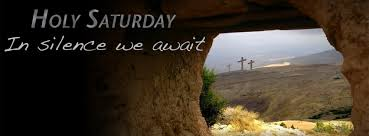
Holy Saturday, the day after the death of Jesus, Christians await, in hope and in faith, for God to show us a sign that Jesus is truly His son. When we think of the emotions of the followers of Jesus, so sure that He was the savior, to experience His death, their heartbreak and confusion must’ve been unbearable! Were they duped? How were they so wrong to think that Jesus was God? Yet, because of everything that they experienced while with Jesus, there still exists a sense of hope in their hearts. They don’t yet understand, and they are questioning, but they haven’t yet fully rejected the belief that Jesus is the son of God.
Taken from the Christian prayer-book “The Liturgy of the Hours”, here is an ancient sermon attributed to Easter yet prayed on Holy Saturday. What does this sermon says to you in your life’s journey:
… continue the conversation here or on social media …
{loadposition blogsocial}
Rest Stop (Good Friday) … love

Love; the complete and selfless giving for another; a desire to allow the other to shine and to grow. On this day, Good Friday, Christians recall Jesus, who out of love, willingly gave Himself to suffer and to die so that we may shine and grow. Jesus, the night before, agonized and prayed over this decision of suffering and dying, hoping for another way to carry out our salvation. But in the end, in response to the message Jesus hears in prayer, He says “not my will, but Your will be done.” In trust, faith and love Jesus freely suffers and dies for us.
How do we express love for others? Do we, in faith, trust enough to share our love? When we are suffering and find life difficult, in faith do we turn to Jesus who not only suffered, but who also found life’s situations difficult to endure?
Today, in faith and trust, knowing that Jesus understands what it’s like to make difficult decisions, to suffer, to feel physical and emotional pain, and to love, do we turn to Him in prayer and ask for guidance, for strength, for hope, for peace, for …..
… continue the conversation here or on social media …
{loadposition blogsocial}
Rest Stop (Palm Sunday) … the start to an emotional week

Today, for Christians around the world, Palm Sunday marks the beginning of Holy Week, the days leading up to the death and resurrection of Jesus Christ. Spiritually, Holy Week has always been a special time for me as this week is a high point of much emotion in the life of Jesus, His early followers, and for me. In my personal spiritual journey I try to understand what it was like living in the time of Jesus. I read historical books as well as the Bible in my attempt to more deeply understand and feel the emotions of the people of the time. In my effort for a deeper and closer relationship with God, I immerse myself into the Bible stories, trying to feel what they felt; experience what they experienced. This week, Holy Week, is a recollection of not just an ancient story, but a retelling of real events which happened to real people who lived real emotions, real feelings, and real experiences.
Our challenge this week is to enter into the emotions of the apostles and the bystanders as they experienced the events leading up to the betrayal, arrest, death and later resurrection of Jesus. The emotions of this week begin today, with the joyous celebration of Jesus entering, as a beloved hero, into Jerusalem. Later this week the joyous celebration and exaltation of today becomes the confusion of Thursday as one of their own betrays and hands over Jesus to the Romans to be arrested. Quite quickly the feeling of confusion turns to fear and depression on Friday when Jesus is tortured and later killed as a common criminal. Jesus, for whom they left family and jobs, is now dead, betrayed by one of their own! Three days later comes the bewilderment and hope as news spreads of Jesus’ resurrection Sunday morning!
As this week unfolds I will share with you my reflections and feelings of the events of Holy Thursday, Good Friday, and Easter Sunday. I invite you to join with me in my spiritual journey this week. Share with us your reflections and emotions as you journey through this holy week.
My challenge for today:
- What can I do to more deeply understand the emotions and reactions of the apostles as they triumphantly enter Jerusalem?
- What can this week teach me about my faith life?
- How do I hope to have my life changed by this exercise of delving into the emotions of the stories of this week?
… continue the conversation here or on social media …
{loadposition blogsocial}
Rest Stop (Ash Wednesday) … letting go
Today, Christians around the world will receive ashes on their forehead as a reminder that we came from dust and will once again return to dust. Therefore, “Ash Wednesday” is a time to pause, reflect on our lives, and make plans to remove from our lives those aspects of ourselves which do not lead us closer to our God.
The practice of pruning our lives of those areas which are not healthy or which take us away from our inner-peace, produces a sense of humility as we realize that we are not perfect, but that we have the ability to learn from our imperfections. Letting go allows us to be true to ourselves, and open to the guidance of others.
There are people who exemplify humility, and for me, the ideal example comes from Saint Francis of Assisi. He was a wealthy son of a powerful merchant father, who, after gaining personal insight, gave up everything to live in poverty and to serve the poor in the spirit of Jesus. It wasn’t simply the giving up of everything that made Francis humble; it was his attitude and way of living. In the book “The Way of St. Francis: the Challenge of Franciscan Spirituality for Everyone“, author Murray Bodo, OFM writes:
In other words, living our lives focused on our values, and in a true sense of a love of neighbor, will keep us grounded (humble) and focused on our priorities (simplicity). Today’s closing prayer from the Liturgy of the Hours morning prayer nicely sums up what I am saying: “Change our selfishness into self-giving. Help us to embrace the world you have given us, that we may transform the darkness of its pain into life and joy.”
What can we do to help us attain humility and simplicity?
- Spend 10 minutes each day in quiet, focusing your thoughts on simple phrases and your breathing.
-
Spend time watching and reflecting on the nature around you. Do you see the ant, flower, bird, leaf, dog, cat, etc. What are they doing?
-
Make a list of your life’s priorities. Those items at the top of your list need your full attention. The rest, well, decide what is necessary and what is merely clutter in your life.
-
Help others. Love your neighbor.
… continue the conversation here or on social media …
{loadposition blogsocial}